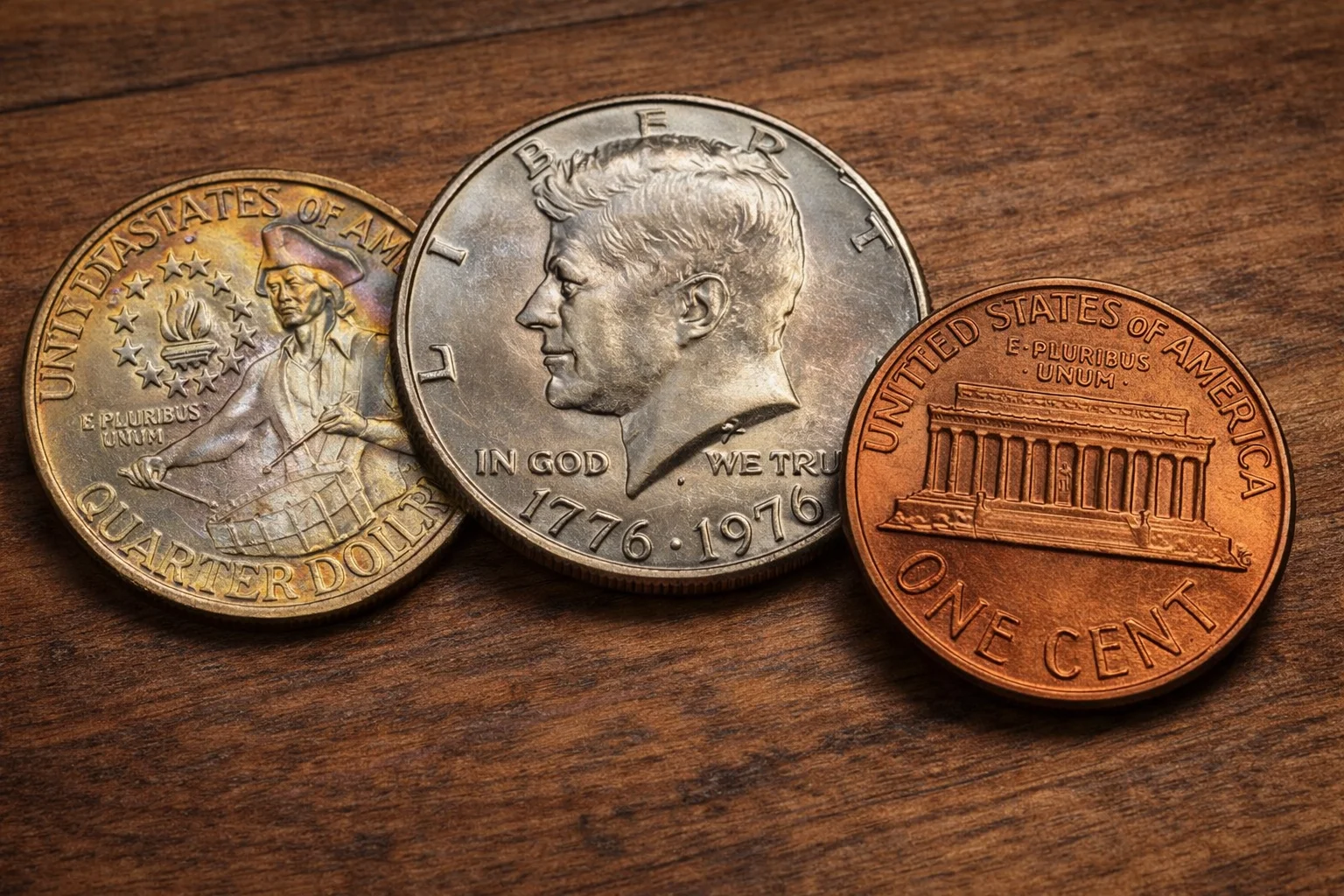

Ordinary circulation coins bring owners small profits ranging from $1 to $5. Medium quality specimens bring sellers decent money between $50 and $350. Rare Canadian coins sell at auction for record prices reaching $100000 to $220000.
Canadian coins value depends on original mint run numbers.
Coin Name | Mass in Grams | Metal Content | Edge Type |
5 Cents 1921 | 2.44 g | Silver metal | Plain |
25 Cents 1973 | 5.05 g | Nickel metal | Reeded |
1 Dollar 1948 | 23.32 g | Silver metal | Reeded |
Coin thickness also plays an important role. Diameter measurements must match official specifications. Silver versions show higher weight parameters than base metal versions.
Every nominal contains rare varieties.
People call this coin the king of Canadian coins. Government workers melted almost all coins because of metal law changes.
Ordinary worn coins sell today for prices from $1500 to $3000. High quality specimens cost much more. Record price for this coin reached $115000 at auction.
Finding this coin in daily change is impossible.
This rare quarter variant honors the Royal Canadian Mounted Police anniversary. Mint workers used a wrong front die having a large queen portrait.
Ordinary worn items sell for $100 to $250. Perfect state MS65 coins reach a value of $1500. Record price at auction stands at $11500.
Collectors identify this coin by counting tiny beads near the border. Close beads indicate the rare variety.
Low production numbers happened because of political changes in India. Mint workers produced only 18780 coins.
Real market value for worn items is $800 to $1200. Perfect coins without wear show a price of $2500. Record price for MS65 state reaches $12500.
Buying this dollar requires expert authentication.
Coin and Year | VG8 | VF20 | EF40 | MS60 | MS63 | MS65 |
1 Cent 1936 Dot | $5000 | $12000 | $22000 | $45000 | $80000 | $200000 |
5 Cents 1921 | $1500 | $3500 | $6000 | $15000 | $32000 | $115000 |
10 Cents 1969 Large | $80 | $180 | $350 | $1100 | $2800 | $11000 |
25 Cents 1973 Bust | $100 | $220 | $400 | $900 | $1800 | $11500 |
50 Cents 1921 | $6000 | $15000 | $30000 | $65000 | $120000 | $220000 |
1 Dollar 1948 | $800 | $1100 | $1600 | $2200 | $3800 | $12500 |
High grade items show the best value growth. Selling low grade items brings minimal profit. Investors should buy specimens starting from MS63 state.
Learning grading methods prevents overpaying. Conduct coin inspection under a bright lamp. Using a magnifying glass helps spot tiny details.
Check these areas during evaluation:
Queen hair lines
Crown details
Legend letter sharpness
Surface mint luster
Worn details drop coin grade values. Total scratch absence guarantees MS state.
Production mistakes make ordinary coins unique. Buyers pay high prices for verified errors.
This error happens when a metal blank lies wrong in the press. Part of the coin design remains empty. Slight 5% shifts have no extra value.
A coin showing a 30% shift sells for $120. A coin showing a 50% shift with a clear date sells for $250.
Record price for large silver coin shifts exceeds $800. Visible errors find buyers fast.
Double die hits on a moving blank create double images. Double dates and profiles are highly valued.
Weak doubling has a value of $20. Clear lettering doubling sells for $250. Record price for dollar coins is $1200. These errors sell quickly.
Die wear causes metal pieces to break off. Extra metal appears on the coin surface.
Small dots raise cent value to $5. Large metal lumps sell for $35. Record price for complex die chips is $150.
These errors are common in circulation.
Market values change quickly on coin auctions. Investors must track yearly value changes. Let us review price changes for 50 Cents 1921 in VG8 state.
2024 price: $4800
2025 price: $5400
2026 price: $6200
Overall value growth reached 29% in three years. Let us compare this with a standard silver dollar in medium state. Price growth was only 12% in three years.
Rare coins offer better investment safety. Low mint runs protect capital from inflation.
Wrong storage methods cause major financial losses. Poor handling drops coin values instantly.
Look at these real damage examples:
Acid cleaning drops coin value from $1000 to $300
Cloth wiping leaves scratches reducing price by 50%
Plastic holder chemical use creates green rust
Coin drops on tables reduce grades from MS65 to MS60
Surface shine loss reduces investment attraction. Use only inert coin holders.
Wash dirty items with distilled water. Dry coins without surface rubbing.
Successful coin investing requires a plan.
Avoid buying coins on bad websites.
Follow these simple rules:
Buy coins in certified slabs
Verify certificates in online databases
Sell items when prices grow 30%
Study mint run numbers
Canadian coins have high liquidity.
Smart choices secure steady profits.
Some regular coins have special varieties. These varieties happen because of small design changes. Knowing these details helps collectors spot valuable items.
This penny is extremely famous. Mint workers placed a tiny dot below the date.
Only three specimens exist today. Ordinary cents without the dot are worth face value. The dot cent is worth over $200000.
Collectors check all 1936 pennies hoping to find a dot. Most found dots are fake. Fake dots are made by soldering metal to the surface.

This dime has two main varieties. The common variety has a small figure 9 in the date. The rare variety has a large figure 9.
Finding a large 9 dime is very difficult. Worn large 9 dimes sell for $80. Perfect specimens reach $11000.
Always compare the date size with other dimes. This simple check can bring a large profit.
This half dollar is called the king of Canadian silver. Mint workers produced over 200000 coins.
Demand for coins was very low. The mint melted almost the entire run. Only about 200 coins survived.
A poor state coin sells for $6000. A perfect MS65 coin costs $220000. This coin is a great investment asset.